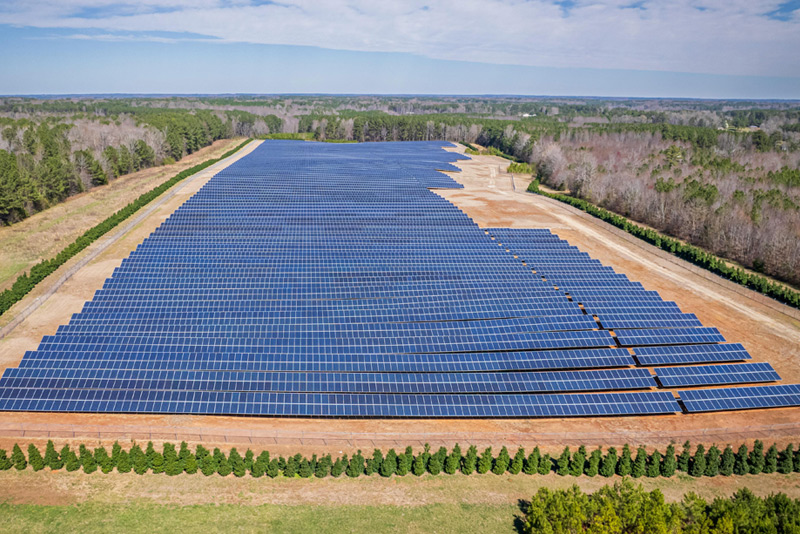
Global investment in the clean energy transition reached a record-breaking $2.3 trillion in 2025, underscoring sustainable investing’s movement to mainstream. For investors and individuals seeking growth while supporting a low-carbon future, these numbers serve as both a signal and an invitation.
A Resilient Energy Transition in a Volatile World
Even amid trade tensions and shifting policies, global investment in the clean-energy transition climbed 8% from 2024 to 2025 to a record $2.3 trillion, according to a new report by BloombergNEF. Capital continued to flow into clean technologies, supply chains, and transition-related finance despite conditions that usually cool long-term spending.
Electrified transport led with $893 billion for EVs and charging, followed by $690 billion in renewables and $483 billion for grid investments—the backbone linking solar, wind, and data-center growth. Clean-energy supply again outpaced fossil fuels, while energy-transition debt rose 17% to $1.2 trillion. Even in a volatile world, the direction of capital is unmistakable: investors are backing technologies that cut emissions and strengthen energy security.
Where the Money Is Flowing
The center of gravity in clean energy investment is shifting eastward. Asia Pacific led the world in 2025, accounting for 47% of total spending, with China alone deploying about $800 billion. While China recorded its first dip in renewables funding since 2013, it continues to anchor global clean-tech manufacturing and supply chains.
Elsewhere, momentum is building. The EU’s investment jumped 18% to $455 billion, contributing the largest share of global growth. India rose 15% to $68 billion, reflecting its expanding clean-tech footprint, and the U.S. added 3.5% to $378 billion despite policy headwinds.
The clean-energy transition is no longer a single-country narrative. Multiple growth engines—China, the EU, India, and the U.S.—are building manufacturing bases, power grids, and enabling technologies, opening new pathways for globally balanced portfolios.

Clean-Tech Supply Chains and the Data Center Effect
The 2025 data highlight a rapid buildout of clean-tech supply chains, with $127 billion invested in factories for solar modules, batteries, electrolyzers, wind equipment, and battery metals—a 6% rise from 2024. Battery manufacturing and materials led the increase, even amid persistent overcapacity and price pressure. China continues to dominate global supply chain investment and is likely to retain its lead for several years, though onshoring in the U.S. and EU is accelerating as Western economies scale domestic production to reduce import dependence and bolster energy security.
Another major trend is surging data center investment, estimated at $500 billion in 2025—exceeding solar investment and second only to electrified transport. As AI and cloud infrastructure expand, these energy-intensive facilities are driving demand for low-carbon power, storage, and modernized grids, tightening the link between the digital economy and the clean energy transition.

From Macro Flows to Individual Opportunity
Behind the trillion-dollar totals lies a story of how clean energy is reshaping industries and investment. Nearly $900 billion poured into electric vehicles and charging networks in 2025, alongside $480 billion for power grids—signaling a lasting shift in how the world moves, powers homes, and connects data. Climate-tech firms drew $77 billion in equity, up 53%, while transition-related debt climbed to $1.2 trillion, opening new pathways for investors across both equity and fixed income.
Yet the pace is moderating: growth has cooled from 27% in 2021 to 8% in 2025. The energy transition is advancing, but advancing unevenly, leaving room for opportunity in overlooked areas such as wind manufacturing and enabling technologies.

Investing in a Record Year—Strategically
BloombergNEF’s base-case Economic Transition Scenario projects average annual global energy transition investment of $2.9 trillion over the next five years. Some supply chain segments are already exceeding required levels, while wind manufacturing lags, highlighting the need for selective, research-driven exposure rather than chasing headline growth.
For investors pursuing responsible growth, key principles endure. Focus on proven technologies—renewables, storage, EVs, and grids—that offer lower risk and established models. Diversify across regions to capture growth while managing policy and currency exposure, and balance equity with debt strategies that finance clean infrastructure and credible transition leaders for lasting resilience.
At Egéa SRI, we see this record year as part of a lasting structural shift in how the world powers its economies—and how investors can align portfolios with that change. Connect with an Egéa SRI advisor to build a sustainable strategy that fits your goals, risk profile, and time horizon.
This information is subject to change at any time, based on market and other conditions and should not be construed as a recommendation of any specific security or investment plan. Past performance does not guarantee future results. All investments involve the risk of potential investment losses, and no strategy can assure a profit. There is no guarantee that a company with a strong ESG score or one that focuses on sustainable investing will outperform a company with a lower score or without that focus in any given market environment.