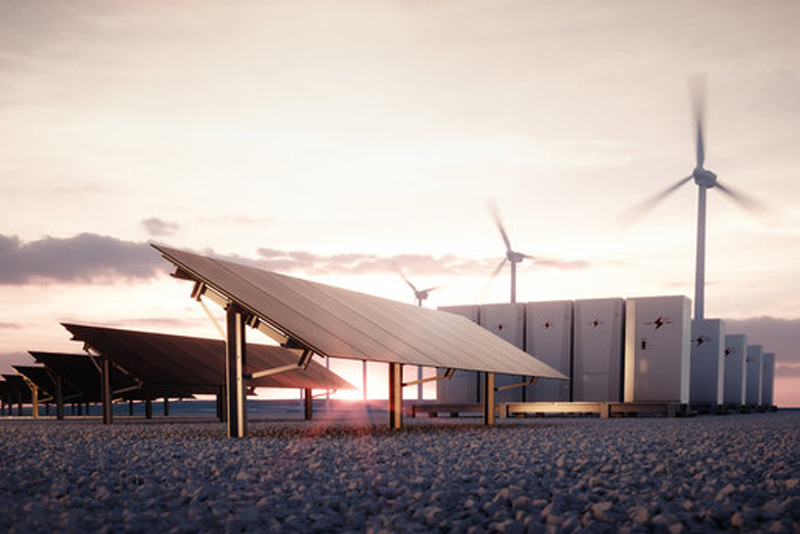
As electricity generation capacity expands globally, wind and solar power have emerged as primary drivers of this growth, systematically displacing aging fossil fuels.
Renewable energy is no longer considered “alternative” or niche. Instead of the incumbent energy view centered around fossil fuels and business-as-usual, another viewpoint has emerged: the electrotech view.
This viewpoint focuses on growth, innovation, and progress. And as technology continues to develop and be more widely adopted, it enables a leap in global energy abundance. Ember’s 2026 Global Electricity Review analyses electricity data from 215 countries and continues to report on the scaling of renewable energy and the emergence of new electric technology.
2026 Global Electricity Review
Ember’s seventh annual Global Electricity Review, part of their collaboration with the Energy Institute Statistical Review of World Energy, offers a detailed analysis of shifts in electricity generation globally for 2025. The report encompasses data from 215 countries, with in-depth insights on 91 countries that together represent 93% of the world’s electricity consumption.
The report illustrates that renewable energy sources, led by solar power with burgeoning battery storage capabilities, are growing to meet global electricity demands. In 2025, the rapid expansion of solar power enabled clean energy sources to satisfy all new electricity demand, eliminating the need for increased fossil fuel-based energy production for the first time since 2020. Both China and India, traditionally major contributors to fossil fuel power increases, saw declines in their fossil generation as their record additions of clean power surpassed the pace of electricity demand.
Increasing Solar Capacity and Generation
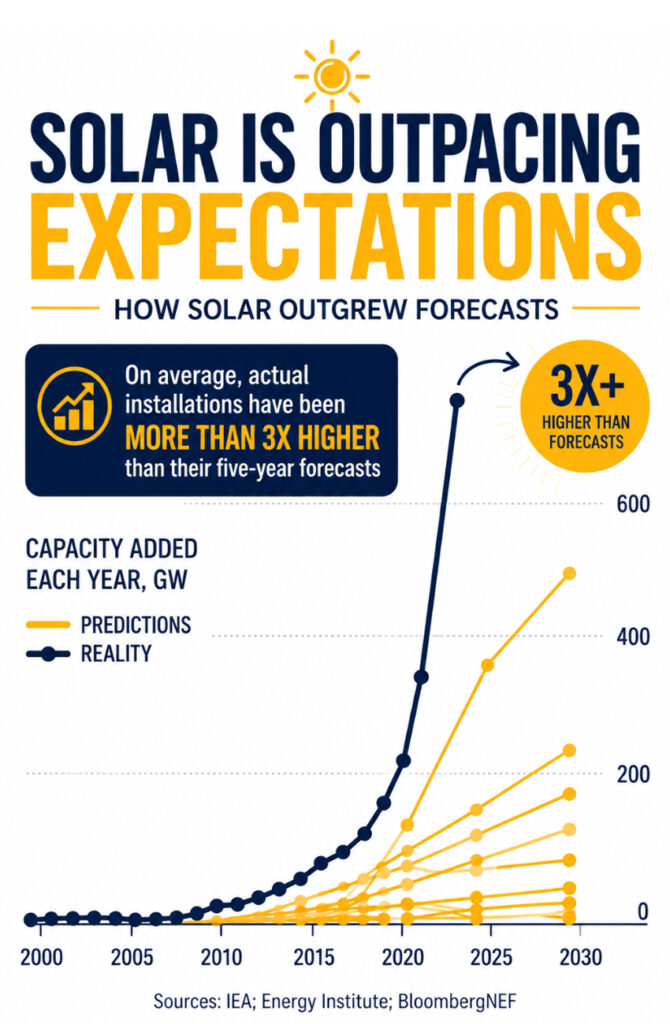
The expansion of solar energy saw unprecedented growth, with global solar generation reaching levels equivalent to the entire electricity consumption of the European Union. China led this surge, contributing to more than half of the global increase in both solar capacity and generation in 2025, moving its solar and wind energy share to 22% of its total generation mix. Meanwhile, India’s advancements in solar energy resulted in a doubling of its previous renewable growth record, with new solar installations outpacing those in the United States for the first time.
Importantly, 2025 also marked a pivotal moment where renewables, including solar, wind, and hydropower, surpassed coal in global electricity generation, collectively providing over a third of the world’s power and bringing the share of coal power down to less than a third—a historic shift within the modern energy framework.
This growth aligns with a broader shift towards integrating solar power with battery storage, pointing towards a future where solar energy can be available around the clock. Battery costs have significantly decreased for two years in a row, with prices dropping 20% in 2024 and a further 45% in 2025. During this period, battery deployment increased by 46%, reaching an estimated 250 GWh. Leading countries like Chile and Australia have implemented enough large-scale storage to redistribute over 50% of their new solar energy, benefitting from reduced energy costs and lower levels of energy waste.
The Electrotech View
In addition to these valuable insights of the state of renewables today, Ember also recently proposed a different way to frame the energy conversation: through the electrotech view.
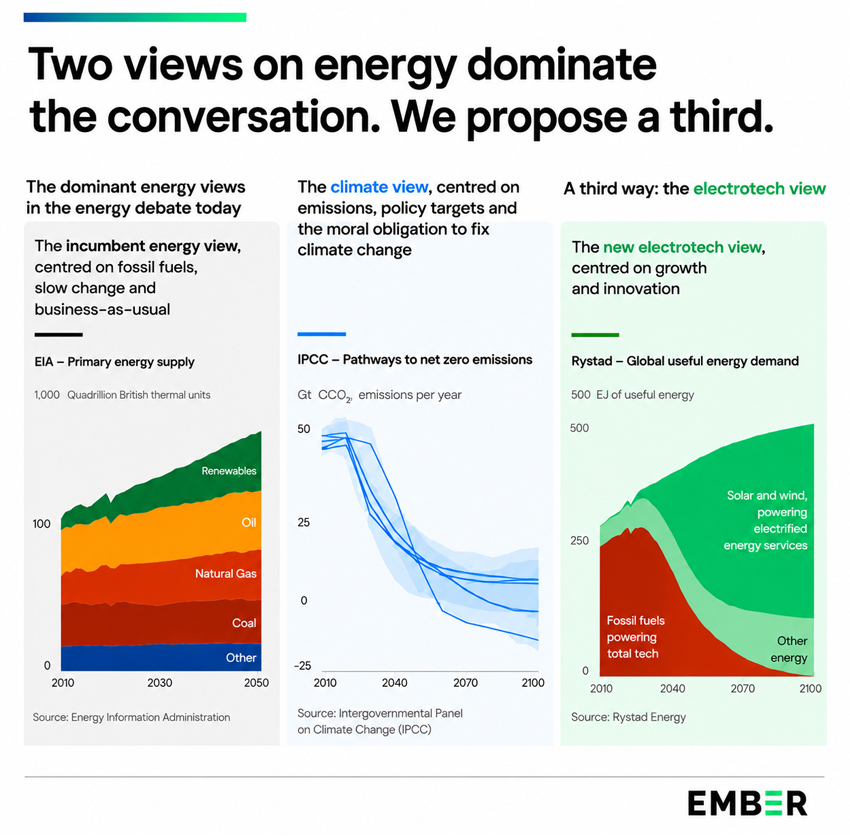
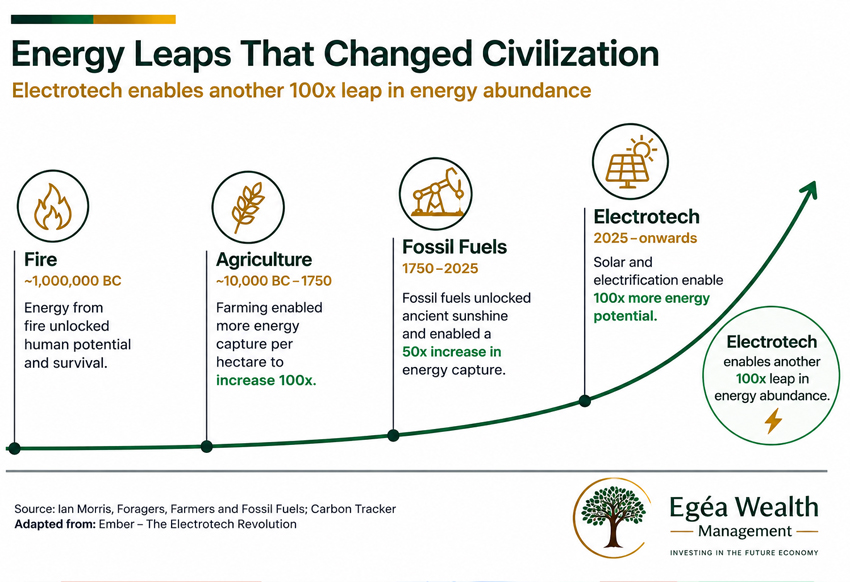
Put into context, the Electrotech Revolution is changing civilization and our economy as we know it. The 100x leap in predicted energy abundance is akin to the difference fire, agriculture, and fossil fuels made to the human way of life.
Ember’s 2026 Global Electricity Review highlights a critical transition within the global energy landscape as systemic pressures mount against traditional fossil fuels, revealing their vulnerability to price fluctuations, geopolitical tensions, and supply-chain disturbances. These challenges underscore inherent structural weaknesses in the existing system, making the move towards clean energy not only urgent but inevitable.
With a decline in fossil fuel generation despite rising electricity needs, we rely on the accelerating shift towards sustainable energy solutions to mitigate the drawbacks of fossil reliance and contribute to a resilient global energy framework.
At EGÉA SRI, we stay ahead of the latest energy technology. Our analysts research the latest in clean energy trends and companies to help our clients make informed decisions on their funds. Contact EGÉA SRI today to discuss how your portfolio can benefit from the clean energy transition and Electrotech Revolution.
This information is subject to change at any time, based on market and other conditions and should not be construed as a recommendation of any specific security or investment plan. Past performance does not guarantee future results. All investments involve the risk of potential investment losses, and no strategy can assure a profit. There is no guarantee that a company with a strong ESG score or one that focuses on sustainable investing will outperform a company with a lower score or without that focus in any given market environment.