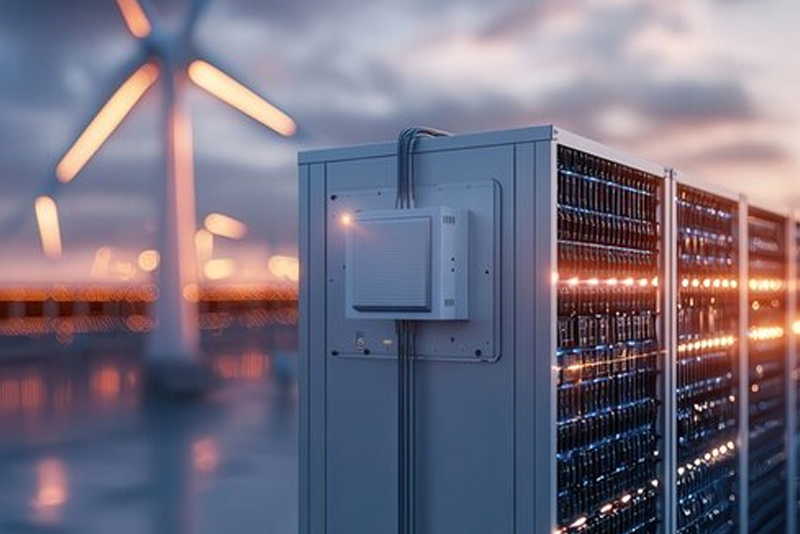
Battery storage has taken a central role in the global energy transition—and that shift is reshaping both power systems and public markets.
Over the last decade, lithium-ion batteries have followed a trajectory that looks a lot like solar: prices have come down fast, and with each step, new use cases have become economically viable. Sodium-ion batteries are also emerging as a serious contender, especially for grid storage and renewable integration where energy density is less critical than cost, safety, and scalability.
For investors, the combination of concentrated supply chains, rapid demand growth, and massive downstream markets underscores the importance of both opportunity and risk.
A Cost Curve
According to the BloombergNEF Battery Price Survey 2024 Report, average lithium-ion battery pack prices fell by about 20% from 2023 to 2024, reaching a record low of $115 per kilowatt-hour. This represented the steepest annual drop since 2017. Packs for battery electric vehicles (BEVs) came in even lower, at around $97 dollars per kilowatt-hour, and BloombergNEF expects “more segments to reach price parity in the years ahead as lower-cost batteries become more widely available outside of China.”
That decline is not magic. Over the past two years, manufacturers ramped up cell production aggressively, bringing global fully commissioned capacity to about 3.1 terawatt-hours—more than 2.5 times 2024 demand. At the same time, economies of scale, process improvements, lower-cost chemistries like lithium-iron-phosphate (LFP), and relatively subdued raw material prices pushed costs lower. The result? As volume grows, cost falls, more applications make economic sense, and, as more use cases open up, volumes grow again.
This is already showing up in real-world markets. In China, some EV models using lower-cost batteries have reached price parity or better versus comparable combustion vehicles, even before factoring in fuel and maintenance savings. In the United States and Europe, sticker-price gaps persist but are narrowing, and more segments are expected to cross into competitive territory as these cost trends continue. For investors, that means battery economics are less a speculative hope and more a structural trend that is increasingly embedded in corporate strategies and policy planning.
Batteries as Essential Infrastructure
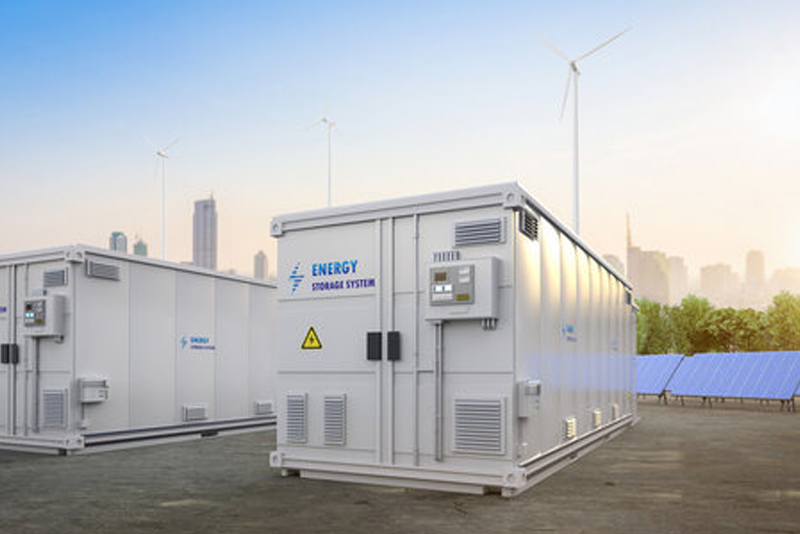
Cost declines only matter if they translate into widespread deployment. Lately, batteries have moved decisively from the margins of the energy system toward its core.
The International Energy Agency (IEA) in their 2023 Energy Storage Report notes that battery storage in the power sector was the fastest-growing commercially available energy technology in 2023, with total deployment more than doubling year-on-year. That includes utility-scale storage, behind-the-meter systems, mini-grids, and solar home systems—together adding roughly 42 gigawatts of battery storage capacity globally in a single year. EVs added another layer on top: battery deployment in EVs increased by about 40% in 2023, with around 14 million new electric cars sold.
Crucially, the energy sector now accounts for more than 90% of annual lithium-ion battery demand, up from about 50% in 2016, when the overall market was ten times smaller. In 2023, nearly 45 million EVs were on the road worldwide—including cars, buses, and trucks—and the power sector had over 85 gigawatts of battery storage in operation. Lithium-ion has become the default choice, thanks to roughly 90% cost reductions since 2010, higher energy densities, and longer lifetimes compared with legacy technologies like lead-acid.
This is not just a climate story; it is an energy security story as well. Batteries provide fast, accurate responses in seconds, helping grid operators maintain stability as more variable wind and solar come online. They also act as backup for critical infrastructure—hospitals, emergency centers, substations—during outages and extreme events. In the IEA’s net zero pathway, battery storage capacity in the power sector needs to rise to about 1,200 gigawatts by 2030, delivering roughly 90% of the incremental storage needed to support a tripling of global renewable capacity. By that date, about 60% of the energy sector’s emissions reductions are associated with batteries, either directly through EVs and solar-plus-storage or indirectly via broader electrification and renewable integration.
Europe’s Battery Energy Storage System (BESS)
Nowhere is this shift more visible than in Europe’s BESS market. Wood Mackenzie’s Global Battery Market Outlook 2025 analysis highlights a region that has quietly become an increasingly attractive destination for storage investment. As of 2024, Europe had about 11 gigawatts of installed BESS capacity, with deployments expected to jump 45% year-on-year to 16 gigawatts in 2025. Looking ahead, they project a 9% compound annual growth rate, taking total capacity to around 35 gigawatts by 2034.
This is all unfolding against a structural capacity crunch: nuclear generation has been fully phased out, about 29 gigawatts of coal capacity are slated to retire by 2030, and much-needed new gas projects have been slow to materialize, even as a capacity market looms on the policy horizon. From a system perspective, batteries are being asked to do a great deal: provide energy shifting, firm up renewables, and deliver ancillary services that residential-scale systems simply cannot offer at grid scale.
Sodium-Ion Battery Breakthrough
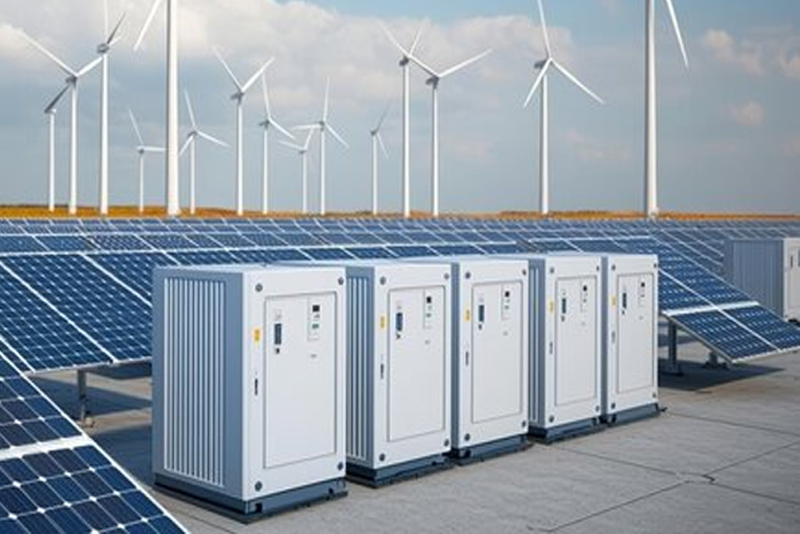
Sodium is abundant and far more geographically dispersed than lithium, which means sodium-ion batteries can draw on cheaper, less concentrated raw material sources. They avoid cobalt and nickel altogether, improving their sustainability profile by sidestepping two metals associated with significant environmental and human-rights concerns. Technically, sodium-ion batteries perform well in cold climates, have lower fire and thermal-runaway risks, and can often be manufactured on existing battery production lines with modest adjustments.
Until recently, sodium-ion remained largely at the pilot and early deployment stage, particularly in China. That is now changing. Sodium-ion still lags lithium-ion in energy density and cycle life, and today lithium-ion remains cheaper in many cases. But sodium-ion’s lower theoretical cost, thanks to cheaper raw materials, and its safety and supply-chain advantages make it a strong candidate for stationary storage. For our clients, this emerging chemistry offers a way to diversify exposure within the storage theme and to engage with technologies that may relieve some pressure on critical mineral supply chains over time.
What This Means for a Values-Aligned Investor
Batteries and emerging storage chemistries sit at the intersection of climate impact, system resilience, and long-term economic value.
On the environmental side, batteries enable higher shares of renewables, reduce fossil-fuel peaker usage, and support the electrification of transport and buildings—key levers for lowering portfolio-level emissions profiles. On the economic side, steep cost declines and rising deployment point to structural growth. And on the systems side, storage supports energy security, particularly by reducing reliance on imported fossil fuels and providing resilience during shocks.
For investors with interests in new emerging green technologies, it’s worth keeping an eye on battery technology. At EGÉA SRI, we keep new technologies and emerging companies on our radar to try and get ahead of the curve and ahead of the financial gains for our clients. Contact us today for a free consultation to discuss how your portfolio can benefit from the clean energy transition!
This information is subject to change at any time, based on market and other conditions and should not be construed as a recommendation of any specific security or investment plan. Past performance does not guarantee future results. All investments involve the risk of potential investment losses, and no strategy can assure a profit. There is no guarantee that a company with a strong ESG score or one that focuses on sustainable investing will outperform a company with a lower score or without that focus in any given market environment.